While selecting skateboard trucks can be intricate, purchasing from a reputable skateboard truck brand and ensuring the right size for your deck generally leads to a satisfactory purchase. When you choose a complete skateboard, the trucks come pre-installed and their size is perfectly matched to the deck's width.
Overview

Understanding the Parts of Skateboard Trucks
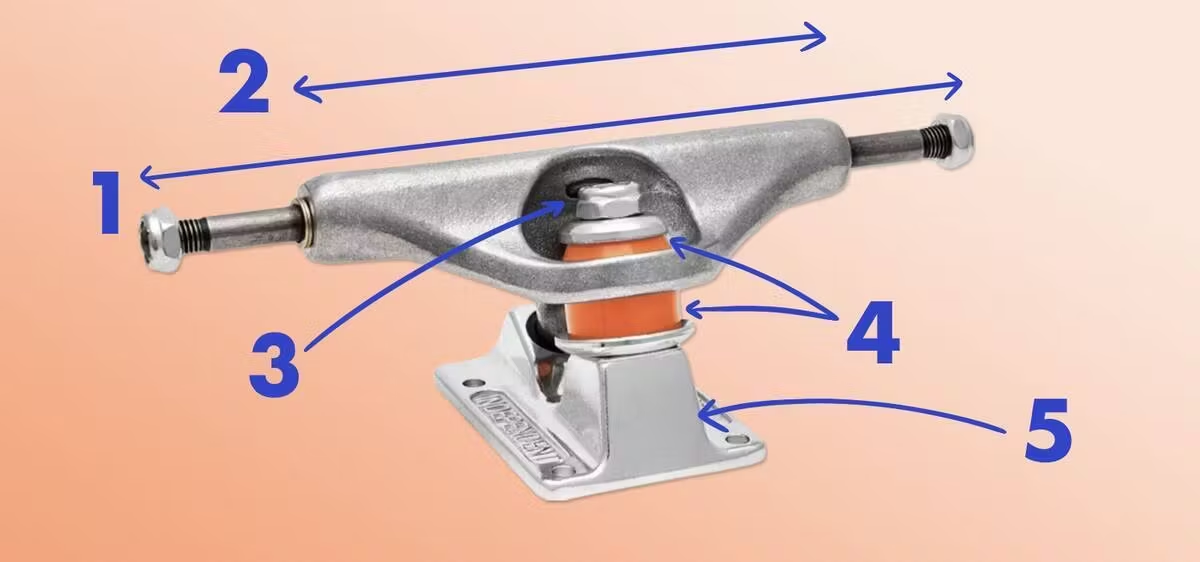
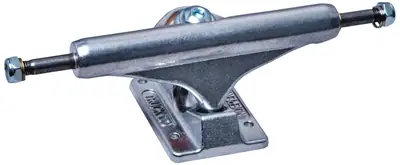
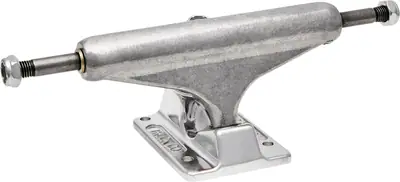
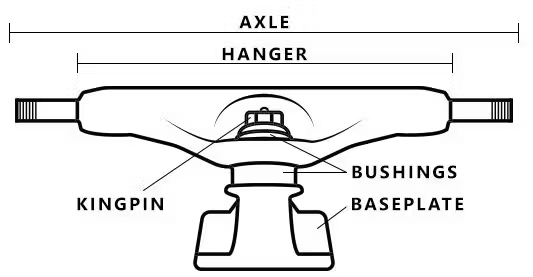
Before delving into specifics, let's start with the fundamentals. What exactly are skateboard trucks? Basically, trucks are the metal T-shaped pieces affixed to the underside of your skateboard deck. They secure the wheels and consist of two key elements that pivot against each other: the baseplate and the hanger, held together by a bolt – known as the kingpin – which also secures the bushings. Here is a breakdown of the primary parts of a skateboard truck:
Baseplate
The baseplate is the flat metal component affixed to the deck with four bolts. Its role is to evenly distribute the skater's weight across the truck, ensuring stability and absorbing the impact of landings onto the deck. Baseplates also house the pivot cups, which enable the hangers to pivot, thus influencing the fluidity of your turns. Being the link between the deck and the hanger, the baseplate is crucial to the truck and the entire setup.
Hanger
The hanger is the largest part of a skateboard truck and is an elongated metal bar tapering into a triangular shape near the pivot, which fits into the pivot cup in the baseplate. Hangers make direct contact with rails, copings, and ledges, playing a crucial role in executing grind tricks.
Axle
The axle runs through the hanger and is threaded at both ends where nuts fasten the wheels in place. Over time, outer threads can wear down, especially during frequent rail stands, but they can be fixed with proper tools. Many T-tools include 5/16" axle re-threaders. If you've had to re-thread your trucks before, a skate tool with a re-threader is very useful. Explore our range:
Kingpin
The kingpin is a large bolt passing through the centre of the truck, holding all the truck parts together. The kingpin nut allows you to adjust the truck's tightness. Kingpins can break under pressure but are replaceable.
Truck Bushings
Bushings are rubbery cushions between the baseplate and hanger, aiding in transferring pressure from your feet to the hangers, thereby influencing the setup's responsiveness. They also affect your turning ability according to their firmness:
- Hard bushings: Lead to stiffer and more stable trucks, beneficial if the trucks are wobbly. Hard bushings require more force to turn.
- Soft bushings: Ideal for carving and cruising, and for skaters who enjoy the nimbleness of loose trucks.
Learn to install skateboard bushings, or discover new bushings, washers or hardware here:
With a grasp of the skateboard truck components, let's move on to essential factors to consider when selecting the perfect trucks for your setup.
Guide to Skateboard Truck Sizes & How to Measure Them
Skateboard trucks come in varied sizes, determined by width and height. Presented here is a quick overview that will aid you in selecting the appropriate skateboard truck size.
Width of Skateboard Trucks
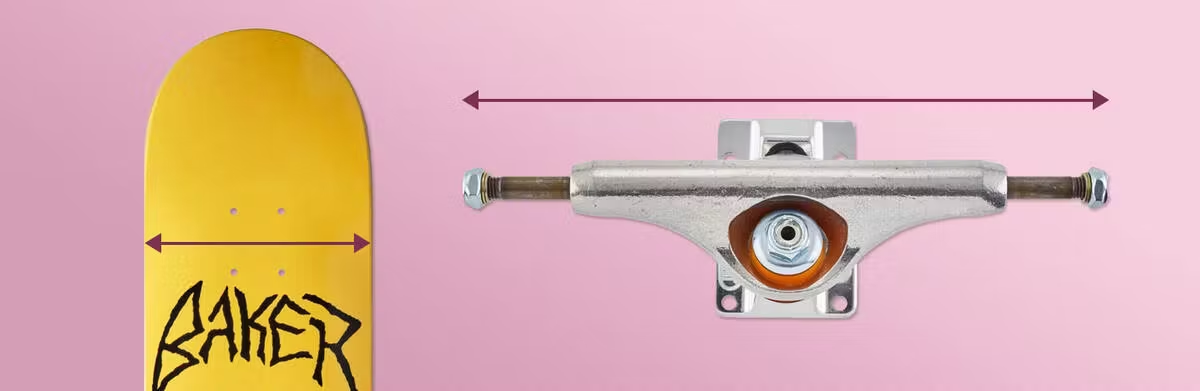
It's crucial that your truck's width aligns with your deck's width. In skateboarding, you'd want the width of your trucks to closely match your deck's width. Narrow trucks feel unstable, while wide ones can obstruct shoes when pushing, complicating flip tricks.
Skateboard truck brands typically describe truck size by hanger width, excluding axle width. However, axle width reflects total truck width, which should match the deck width.
At SkatePro, we specify the axle width of our individual trucks, negating the need for an additional size conversion chart for skateboard trucks.
Height of Skateboard Trucks

Truck height is the gap from the baseplate to the wheel axle centre. In simpler terms, truck height (or profile) defines the distance between trucks and the deck. Two main points to consider regarding truck height are the deck-to-wheel gap and ground clearance.
Truck heights generally fall into high, medium, or low categories, simplifying selection. Here’s what distinguishes the variants:
- Low Trucks (46-49mm): With the deck nearer the ground, it's easier for young or shorter skaters to control setups with low trucks, as they offer greater stability. Avoid wheels over 53mm unless risers are used to bridge the gap between the deck and wheels!
- Mid Trucks (49.5-53.5mm): Mid trucks present a balance between high and low options, with sizes ranging from 49.5-53.5 mm, making them apt for many skaters. Wheels shouldn't exceed 56 mm without risers.
- High Trucks (53.5-60mm): Offering more elevation, high trucks allow for larger wheels, creating an ideal setup for cruising due to increased clearance. For those into freestyle skateboarding, high trucks provide a larger balancing platform for rail stands.
We clearly mention the truck height in the specifications for each truck in our collection.
Key Considerations for Skateboard Truck Height - A Quick Overview
Choosing truck height is subjective, influenced by riding style and physical characteristics. Consider these factors when deciding between higher or lower trucks:
- Wheel clearance: The gap between wheels and deck is influenced by diameter and truck height. Carving requires ample clearance compared to stable, tight trucks. Loose trucks also demand sufficient wheel clearance.
- Pop angle: This angle expands with truck height: lower trucks provide a quicker pop, while higher ones offer more leverage for "bigger" tricks, despite a steeper angle.
- Pushing: Greater truck height results in more distance between pushing and deck foot, making longer rides less comfortable.
- Tricks: Truck heights affect trick difficulty: high trucks offer wider platforms for balance tricks, while low trucks increase agility for flatland flips.
- Truck weight: Larger trucks weigh more.
- Personal height: Tall skaters with long legs might find controlling high trucks easier compared to shorter skaters.
Riser Pads - Elevate Truck Height and Prevent Wheel Bites
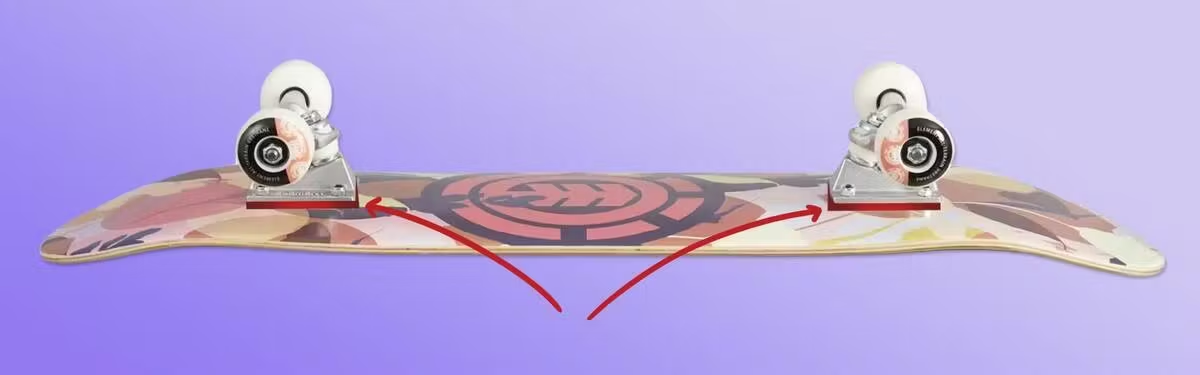
Riser pads provide a practical solution for skateboarders facing wheel bites, where wheels touch the deck during sharp turns. By increasing the deck-to-wheel distance, riser pads offer a cost-effective fix.
If you want to experiment with larger wheels or looser trucks, riser pads could be pertinent.
For those looking to resolve wheel bites or enhance skateboard performance, check out our riser pad collection:
Having the right hardware is critical when installing riser pads. Refer to this guide if you have concerns about bolt lengths:
Weight Considerations for Skateboard Trucks: Heavy or Light?
Skateboard trucks significantly affect the total weight of your skateboard, and recent design enhancements have focused on minimising this weight. Lightening kingpins and axles, and utilising varied materials, are among the techniques employed.
As of now, the Tensor Mag Light Series claims to be the "lightest trucks ever" on the market. While lighter trucks offer trick advantages, weight differences may not be as pronounced as other truck characteristics.
When considering skateboard truck weights, remember there's a correlation between size and weight - larger trucks weigh more. So, truck weight is best assessed in relation to wheel diameter and deck width.
Adjusting Loose vs. Tight Skateboard Trucks
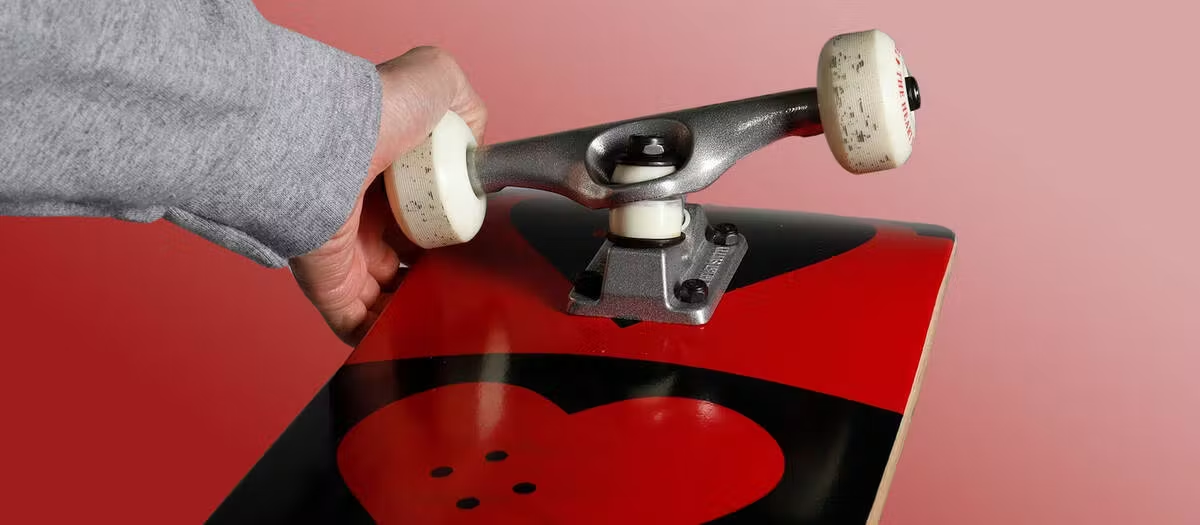
Adjusting skateboard trucks is done by turning the kingpin nut using a skate tool, spanner, or wrench. Tightening increases stability but limits turning, while loosening enhances response and agility.
Consider tightening if:- You experience wheel bites during tricks or turns.
- You desire more consistent pop.
- Riding feels wobbly at high speeds.
- You need to lift the front wheels to change direction.
- You prefer sharper turns.
- You seek greater side-to-side movement freedom.
The hardness of bushings also impacts turning and carving. Bushings vary in firmness, measured by durometer scale: higher values mean harder bushings, resulting in tighter trucks. Explore our bushing options:
- Skateboard Bushings
- Guide: Adjust Your Trucks for Better Control
- Skateboard Bushings - Everything You Need to Know
Steps to Installing Skateboard Trucks
```To attach the trucks, utilise 4 nuts and 4 bolts for each one. It is advisable to secure the bolts in a diagonal cross pattern, ensuring that the baseplate is evenly tightened across its entire surface.
We are always prepared to assist: