Skateboard bushings, at times referred to as truck rubber or cushioning, hold a crucial function for your skateboard. The hardness and design of your bushings directly influence the way your board turns, reacts, and feels beneath your feet.
- With harder bushings, you gain improved stability and potentially a more rapid response.
- Softer bushings ease the task of turning and steering the skateboard with minimal effort.
Overview

Defining Skateboard Bushings
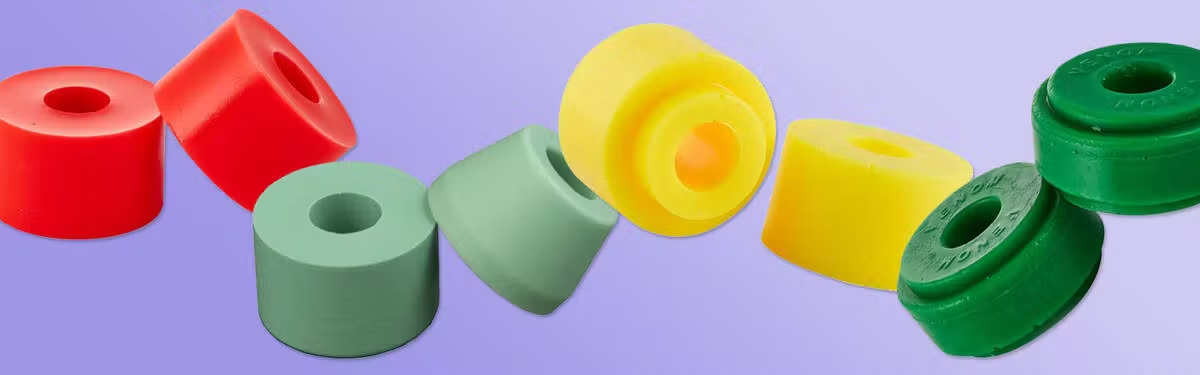
Skateboard bushings are the cylindrically or conically formed urethane rubbers positioned on the kingpin of the trucks. They allow you to steer and manage the skateboard, thus having a substantial influence on the broad characteristics of your skateboard.
Each skateboard truck holds two bushings:
- Top bushing – directed downwards towards the ground.
- Bottom bushing – oriented upwards towards the deck.
The configuration of the bushings adapts to your movements as you apply weight on either side of the deck. This prompts the trucks to pivot, subsequently altering the course in which you're heading. The extent - or degree - of these pivots dictates the sharpness of your turns. The effort required to make the trucks pivot is heavily determined by how seamlessly the bushings conform to your movements.
→ The rigidity or softness of your bushings determines the equilibrium between agility, responsiveness, and stability.
The Impact of Bushing Hardness on Your Skateboard
- Softer bushings equate to looser trucks that are easier to manoeuvre.
- Harder bushings withstand pressure more efficiently, resulting in tighter and more stable trucks.
Consider Harder Bushings If...
... your board has an overly loose feel:
If experiencing speed wobbles or generally sensing excessive looseness in your trucks, requiring more stability, harder bushings would suffice your needs.
... wheelbite is a problem:
Harder bushings can mitigate the risk of wheelbites. Prioritise checking your truck's tightness and ponder whether risers might be beneficial.
... you have tightened the kingpin nut to its bounds:
Should you notice the threading on the kingpin protruding from the nut or observe your bushings appearing deformed where the washer applies pressure, contemplate harder bushings. Tip: If you possess washers that fit appropriately, you can place one or two beneath the truck bushing washer to lessen the visibility of exposed threading.
Consider Softer Bushings If...
... steering and initiating turns is challenging:
Turning will require less effort with softer bushings in play.
... carving and cruising are your preferences:
Softer bushings enable sharper cornering, enhancing carving capabilities.
... A loose and smooth style fits your preference:
Should you prefer a board offering easy turns and responsiveness to subtle shifts, softer bushings deliver that smooth, reactive control.
There are varied reasons to favour looser trucks, with some skateboarders even opting to remove top bushings for ultra (though noisy) high flexibility (note: caution is advised with this method).
Bushing Hardness and Your Weight
Your body weight influences how bushings react to your movements; heavier individuals can apply greater pressure on the bushings with ease, whereas lighter individuals will necessitate softer bushings to realise the same responsiveness level.
We have curated a table offering suggested bushing hardness based on rider weight. Keep in mind, body weight is merely one aspect and doesn’t account for personal preferences. This chart serves as a guideline for individuals exploring diverse bushing hardnesses for the first time.
→ Your best reference point is your current bushings. Knowing the durometer rating allows you to move up for a firmer feel or downwards for a softer one.
| User Weight (kg) | Rider Weight (lbs) | Softer / Looser Setup (Durometer) | Stiffer / Tighter Setup (Durometer) |
| <65 kg | <143 lbs | 81A - 85A | 86A - 90A |
| 65 - 80 kg | 143 - 176 lbs | 86A - 90A | 91A - 95A |
| 80 - 90 kg | 176 - 198 lbs | 91A - 95A | 96A - 100A |
| >90 kg | >198 lbs | 96A - 100A | 100A |
Complete skateboards designed for children feature a balanced bushing setup aligning with a child’s weight and motions. New trucks arrive with bushings tailored for most skaters, and broader trucks often utilise slightly firmer bushings comparatively to narrower trucks.
→ Consider skateboard and truck width when selecting a new complete skateboard or trucks with pre-installed bushings - they are likely to suit your needs.
The Effects of Bushing Shapes on Performance
Bushings are available in diverse shapes, influencing truck performance accordingly.
- Conical (cone-shaped): typically used as a top bushing, enhancing responsiveness.
- Barrel-shaped (straight): generally used as a bottom bushing, offering stability.
Combining cone and barrel-shaped bushings as described is conventional. A cone on top and a barrel below creates harmony. Dual barrels bolster stability, while reversing the setup switches to improved responsiveness.
Tweaking Kingpin Nuts to Fine-Tune Truck Tightness
- Rotate the kingpin nut clockwise to bring about firmer, less flexible trucks.
- Turning the kingpin nut counterclockwise facilitates easier turning.
If commencing turns proved troublesome or if raising front wheels to steer is frequent, try loosening the trucks. Should trucks feel exceedingly loose and control becomes problematic, tighten them moderately.
Indicators Your Bushings Are Due for Replacement
Inspect your bushings for cracks, splits, or a sticky texture, as these are signs of wear and decreased performance. Replace worn-out bushings rather than tightening your trucks to offset these signs.
If your bushings function well and your skateboard's response suits you, there's no immediate need for replacement. However, the wear indicators mentioned suggest a future necessity for action. When you’re ready for new bushings, find your options here: