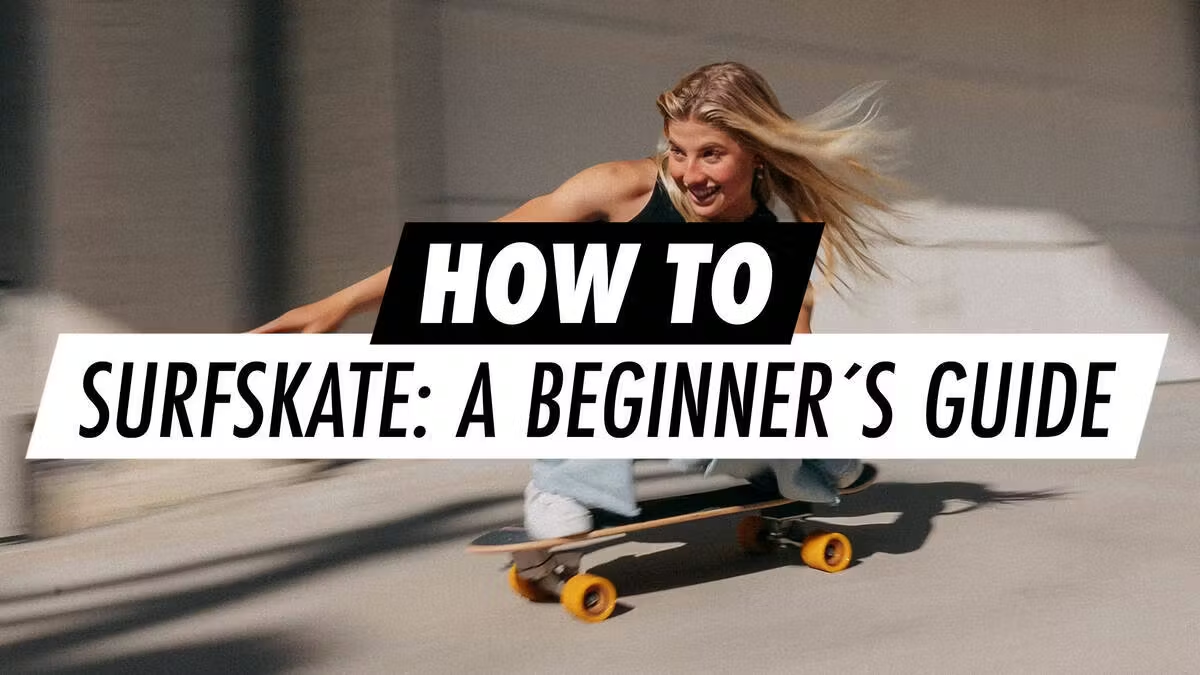
For those who are yet to step onto a surfskate, this guide serves as the ideal starting point for understanding the essentials. It will show you how to manoeuvre by shifting your weight to generate forward movement, a technique distinct from pushing with a skateboard. You'll also learn to execute smooth linked turns and how to position your body for optimal control. These actions are directly transferable to techniques used in surfing, such as "bottom turns" or "cutbacks".
Surfskating provides a land-based method to hone the smooth turns, body control, and balance we associate with surfing. It features a unique surf skateboard equipped with a front truck that pivots in a manner entirely different from that of a standard skateboard truck. Whether you're living far from the sea or the waters are currently calm, surfskating offers a means to refine your surf skills, build leg strength, and perfect your timing.
Overview

Get Started with Surfskating: Mastering Stance and Balance
Surfskate trucks react to the slightest adjustments in foot-placement and feel noticeably different from standard skateboard or longboard trucks. Unlike repeatedly pushing with your foot, just one initial push is sufficient to get moving. From that point on, all forward motion is generated through the surfskate pumping technique.
Your stance underpins every movement in surfskating. Position your front foot just behind the front truck bolts, angling it slightly forward. Place your back foot over the rear truck, with your toes pointed more sideways. Maintain bent knees, relaxed shoulders, and keep your gaze in the direction you aim to travel. Adopting a low, balanced stance enables rapid responses to directional changes.
Master Pumping for Speed on a Surfskate
Unlike conventional skateboarding, gaining speed doesn't require pushing with your foot. Instead, you generate momentum by rhythmically shifting your weight from heel to toe.
The "pumping" action in surfskating consists of:
- Leaning into the turn by pressing through your toes.
- Aligning the rotation of your shoulders and hips with the board's movements.
- Extending your legs while exiting the turn to drive forward.
Picture drawing an S-shape on the ground; each curve offers an opportunity to build speed and set up for the subsequent manoeuvre.
Bottom & Top Turns
Bottom and Top Turns are fundamental elements of surfing, and a surfskate provides a distinctive platform to practice them.
The Bottom Turn occurs at the wave's base, redirecting the surfer back toward the wave's highest point (known as "The Lip"). Similarly, the Top Turn happens near the lip, guiding the surfer back down the wave.
Executing these turns in a smooth sequence is foundational to fluid surfing. They repeat throughout the duration of a wave and are vital to the surfing experience.
Move forward, bend into your knees, and execute a deep carve to one side (Bottom Turn). Then rise into the next curve in the opposite direction (Top Turn). Linking these turns crafts a seamless path akin to gliding on a genuine wave.
Surfskating Stopping Strategies
In surfskating, developing stopping methods suited to the surfskate's distinctive front truck system is essential. If you're accustomed to the regular skateboard method of dragging a shoe along the ground, you might find the reaction of surfskate trucks surprising.
In essence, while the high agility of surfskate trucks simplifies carving and sharp turns, it necessitates a different technique for decelerating.
Thankfully, halting on a surfskate is straightforward. Here are three practical and safe ways to bring your board to a stop:
- Step Off Into a Run - At low to moderate speeds, step off with your back foot first and jog forward, absorbing your momentum. Always focus ahead and select a clear landing area.
- Grass or Rough Surface Stop - Whenever possible, glide your surfskate onto grass or a rougher surface. The increased friction rapidly slows you down without putting stress on the trucks or wheels.
- Carve to Reduce Speed - Execute a series of wide, controlled turns to decelerate gradually. This technique is ideal where space is available, though it won’t suffice for emergency stops.
By mastering these techniques, you'll boost your confidence and maintain control of your surfskate at all times. Achieving stopping proficiency early on in your surfskating endeavours allows you to explore turns, pumping, and other moves freely, without concern about how to slow down.