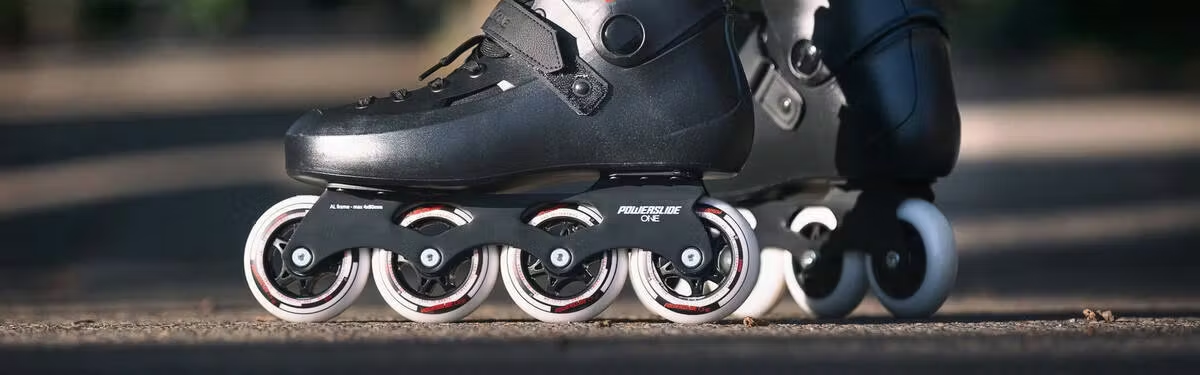
- Wheel size: Influences speed and manoeuvrability.
- Durometer: Refers to the wheel's hardness – affects speed and vibration absorption.
- Rebound: The speed at which the wheel returns to its original form after compression.
- Grip: Determines the wheel's surface adhesion.
- Wheel profile: Influences speed and stability.
Overview

Overview
Which Inline Skate Wheels are Suitable?
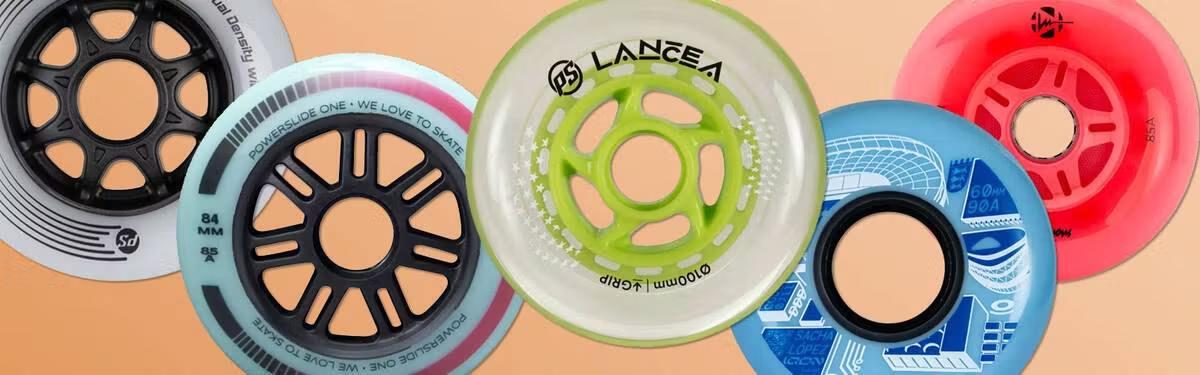
Knowing the recommended type of wheel for your skating style can simplify the selection of inline skate wheels.
Regardless of the inline skating style you adopt, it's essential to pay close attention to the size and hardness of the wheels, ensuring they suit the surfaces you'll be skating on.
| Style of Inline Skating | Properties | Size Range / Hardness Range |
| Fitness Skate Wheels |
Consistent roll Efficient power transfer
|
80-110 mm 80A-88A |
| Freeskate Wheels |
Fast and nimble |
75-110 mm 84A-88A |
| Aggressive Skate Wheels |
Shock absorption and stability Compact size Flat or rounded profiles |
55-80 mm 88A-95A |
| Roller Hockey Wheels |
Excellent grip and agility Quick acceleration Certain wheels designed for indoor use |
65-84 mm 72-84A
|
| Speed Skate Wheels |
Optimised for maximum velocity Suitable for indoor arenas and outdoor paths |
100 mm-125 mm 83A-90A |
Inline Skate Wheels Compatibility
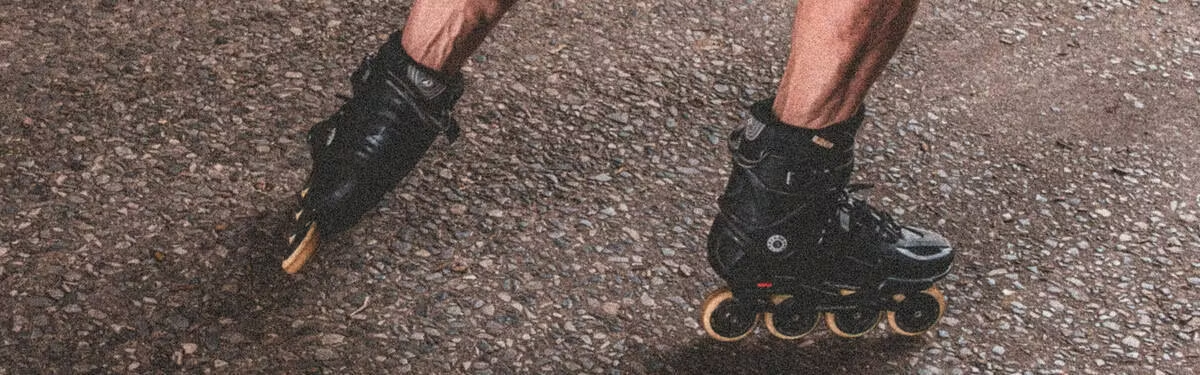
The standard width for inline skate wheels is 24 mm, making it straightforward to locate wheels that will fit your skates. Wheels that are equal to or smaller than the maximum wheel diameter specified for your rollerblade frames can be fitted onto them.
By gaining insight into aspects such as hardness, rebound, grip, and profile, you can select wheels that not only fit but also enhance the performance of your inline skates.
To discover more, continue reading or view our range:
Inline Skate Wheel Size – Diameter
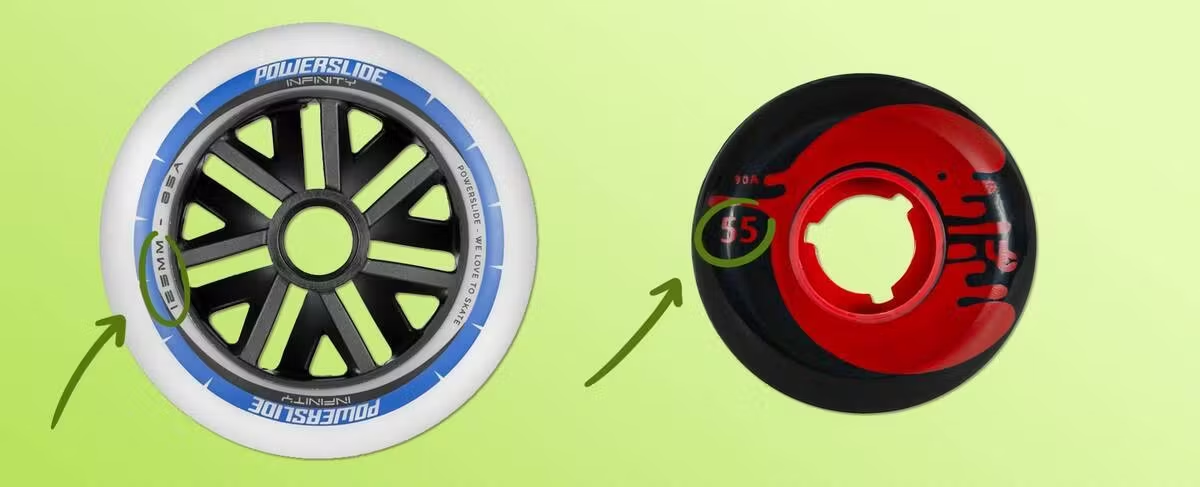
Inline skate wheel diameter is measured in millimetres (mm) and is typically marked on the side of the wheel. If uncertain, you can measure it yourself.
Wheel diameter significantly impacts how inline skate wheels perform. Elements such as speed, control, acceleration, and directional stability are directly influenced by the wheel size.
The influence of wheel diameter on your skates' performance is as follows:
- Smaller diameter: Provides better control and acceleration.
- Larger diameter: Yields higher top speeds and enhanced directional stability.
Each style of skating has its ideal wheel diameter. In the chart below, we’ve offered our general recommendations for various inline skating styles:
Size Chart for Inline Skate Wheels
| Style of Inline Skating | Size Range |
| Aggressive Skate Wheels | 55-80 mm |
| Roller Hockey Wheels | 65-84 mm |
| Fitness Skate Wheels | 80-110 mm |
| Freeskate Wheels | 75-110 mm |
| Speed Skate Wheels | 100-125 mm |
Durometer – Determining Inline Skate Wheel Hardness
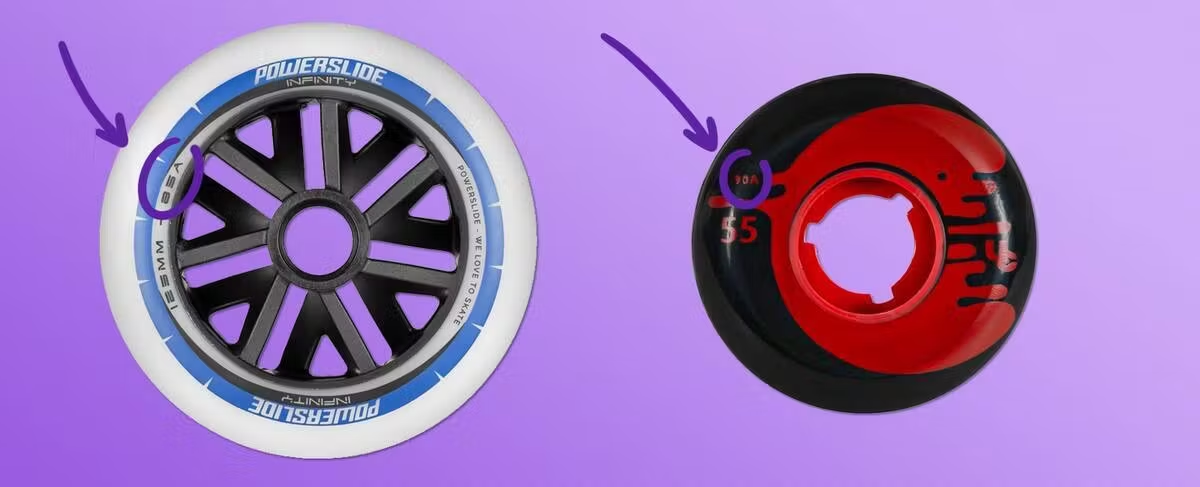
The hardness of rollerblade wheels is commonly assessed using durometer, a standard system for measuring the hardness of materials like plastics and rubber. The A-scale is the predominant method for classifying rollerblade wheel hardness. You’ll notice a number followed by an 'A' (e.g., 82A), with higher numbers signifying a harder wheel.
The A-scale allows a swift identification of the relative hardness among wheels, which is usually printed on the wheel’s side.
Your style of skating dictates the optimal wheel hardness. Below, we present some general suggestions for choosing the correct inline skate wheel hardness suitable for your skating style:
Hardness Chart for Inline Skate Wheels
| Style of Inline Skating | Hardness Range |
| Aggressive Skate Wheels | 88A-95A |
| Roller Hockey Wheels | 72A-84A |
| Fitness Skate Wheels | 80A-88A |
| Freeskate Wheels | 84A-88A |
| Speed Skate Wheels | 83A-90A |
The hardness of the wheel determines its performance on various surfaces and under different conditions. Always take into account the wheel’s hardness before purchasing, as it greatly affects how your skates will perform.
Comparing Hard and Soft Inline Skate Wheels
Understanding how hardness affects wheel performance is crucial, especially when choosing between two wheels with differing hardness levels.
How the wheel's hardness affects rollerblade performance:
Advantages of harder wheels- Achieves greater speeds
- Longer-lasting
- Reduced grip
- Weaker vibration absorption
- Enhanced grip
- Superior shock absorption
- Lower speed
- Less durable
The basic rule for inline skate wheels is that softer wheels provide better vibration absorption and improved grip. Conversely, harder wheels offer less vibration absorption and reduced grip.
Alternative Hardness Scales
Certain brands employ the footprint scale to assess rollerblade wheel hardness. Here’s how the footprint scale translates to the A-scale:
- F0 - approximately equals 88A
- F1 - approximately equals 85A
- F2 - approximately equals 84A
- F3 - approximately equals 83A
Rebound Characteristics of Inline Skate Wheels
The rebound describes how promptly a wheel can return to its original shape after being compressed. With each stride, the wheel gets compressed and then, if it features a high rebound, promptly snaps back, aiding speed. In contrast, a wheel with low rebound will absorb the energy, thus not contributing to speed transfer. Therefore, the wheels’ rebound significantly influences speed.
High rebound is often a characteristic of superior wheels. Manufacturers frequently label wheels with high rebound as SHR urethane, standing for Super High Rebound. While there is no universal method for comparing rebound amongst wheels, lower-priced wheels typically have less rebound, whereas pricier wheels from reputable brands usually offer higher rebound.
Inline Skate Wheels’ Grip
The grip of inline skate wheels is determined by the polyurethane (PU) formula used in their rubber composition. Wheel hardness is a crucial factor affecting this.
The relationship between wheel hardness and grip stands as follows:
- Softer wheels: Provide more grip.
- Harder wheels: Offer less grip.
The grip is also influenced by the surface you skate on. Slippery surfaces, like rinks or indoor skateparks, require more grip to prevent slipping. On rougher terrains like asphalt, grip is a lesser concern.
Hence, when skating on rougher surfaces, it is feasible to select harder wheels without worrying about traction loss in unwanted situations.
Profile of Inline Skate Wheels
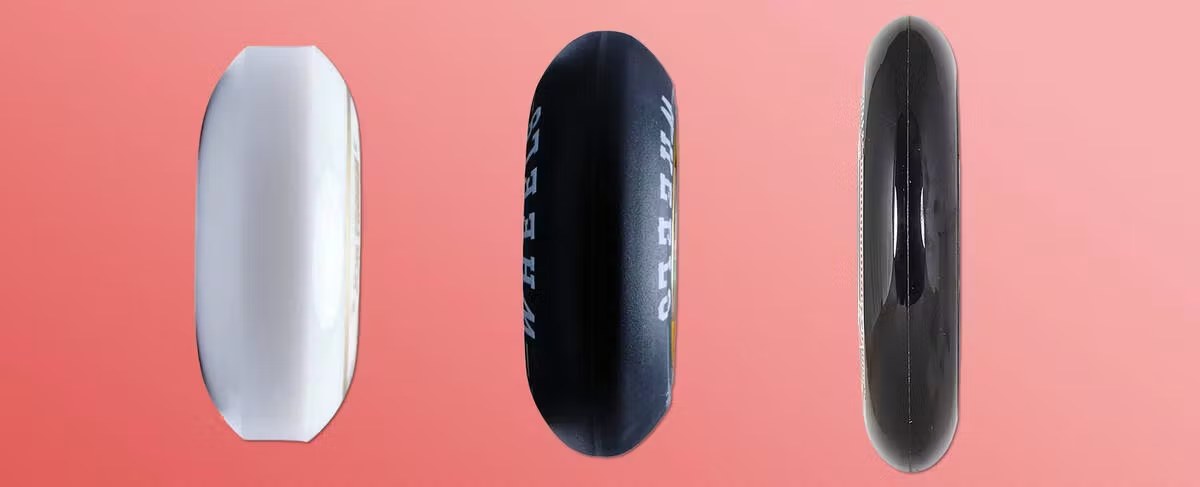
Inline skate wheels feature various profiles, ranging from flat to pointy. The profile determines the contact width between the wheel and the surface. A flat profile ensures a larger contact patch, whereas a pointy wheel has a shorter one.
Pointy wheels apply to numerous skating styles, from fitness to speed-oriented skating. With minimal friction and rolling resistance, pointy profiles are praised for their efficiency. They dominate the inline skate wheel market owing to their versatility and favourable speed characteristics.
Flat wheel profiles cater specifically to aggressive skating. Featuring excellent stability, they are valuable for trick landings though they may compromise speed.
Rounded profiles frequently appear in freeskating and aggressive skating wheels. Within aggressive skating, rounded wheels typically accompany flat setups, minimising risks of wheel bites. Easier control compared to pointy profiles makes rounded profiles appealing to beginners who may appreciate their forgiving nature.
Hubs in Inline Skate Wheels
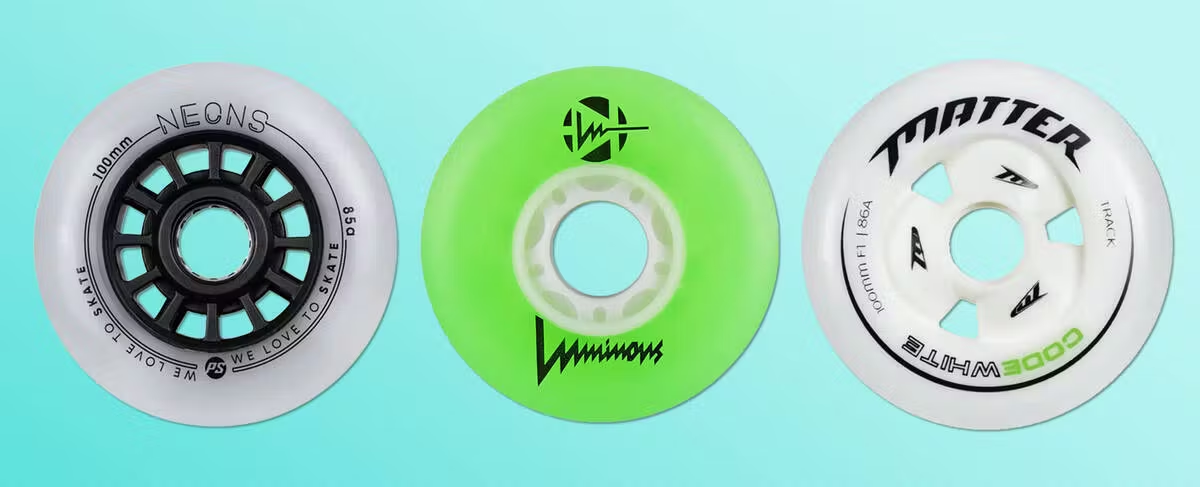
The wheel’s core is called the hub, ensuring the bearings stay centred. Made from hard plastic or aluminum, the hub plays a crucial role. Typically, aluminum cores are heavier (depending on design) but are more impact-resistant and durable compared to plastic cores.
Hubs for inline skate wheels fall into these categories:
- Solid core: Extremely strong, yet heavier.
- Spoked core: Lightweight, but not as durable as solid cores.
- Hollow core: Offers a balanced compromise between durability and lightness.
The ideal inline skate wheel should be strong and durable, yet as light as possible. Lighter wheels require less energy for skate lifting, enhancing efficiency and reducing fatigue.
Maintaining Inline Skate Wheels
Extending your wheels' lifespan is advisable. Wheels typically exhibit the fastest wear in skates, so a smart maintenance approach saves both time and money. Developing a wheel-flipping routine can maximise their life span and maintain optimal skate performance.
Standard inline skate wheel wear involves the centreline shifting outward, leading to an inward flat surface. This can negatively impact technique, indicating the necessity for wheel rotation.
Regular wheel rotation keeps the wheels evenly shaped. Consult our guide on wheel rotation for further assistance:
If unsure whether it's time to replace the wheels on your inline skates, have a look at our guide on this topic:
If you require assistance with installing your wheels, here’s what you need:
For guidance on the upkeep of inline skates, check out our online guide that is filled with valuable insights here:
... And What About Bearings?
Guidance focused entirely on wheel bearings is available. This resource explains all there is to know about their operation:
If your ride isn’t as seamless as before, worn bearings might be to blame. Consider a comprehensive cleaning and fresh lubrication: